

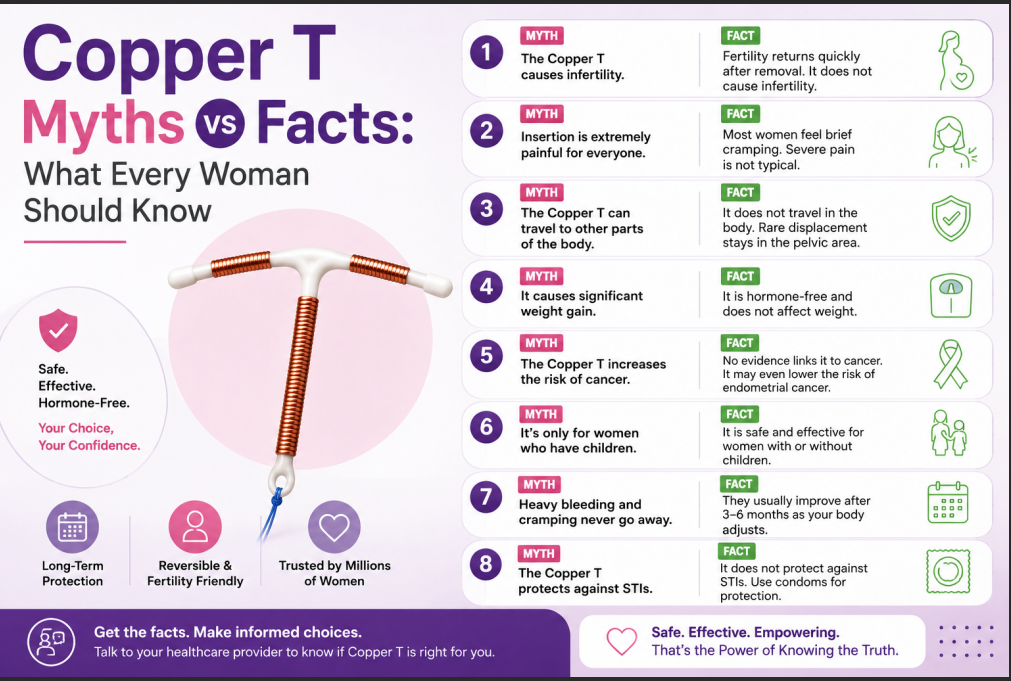

The Copper T is one of the oldest and most trusted forms of long-acting reversible contraception available today, yet it remains surrounded by misinformation. Much of this comes from outdated information, word-of-mouth stories, or confusion with hormonal IUDs, which work very differently. This article separates the common myths from what the clinical evidence actually shows.
Myth 1: The Copper T Causes Infertility
The Myth
A persistent belief is that using a Copper T can permanently affect a woman’s ability to conceive after it’s removed.
The Fact
The Copper T is a non-hormonal, reversible contraceptive. It doesn’t affect ovulation or the underlying reproductive system. Once removed, fertility typically returns quickly, often within the very next menstrual cycle. There’s no established clinical evidence linking the Copper T to long-term infertility in women without pre-existing reproductive conditions.
Myth 2: Insertion Is Extremely Painful for Everyone
The Myth
Many women avoid the Copper T out of fear that insertion will be unbearably painful.
The Fact
Pain tolerance varies from person to person, and most women experience insertion as a brief cramping sensation rather than severe pain. Providers often recommend taking a mild pain reliever beforehand, and the discomfort typically subsides within a few minutes to hours after the procedure. Severe, prolonged pain is not typical and should be flagged to a healthcare provider if it occurs.
Myth 3: The Copper T Can Travel to Other Parts of the Body
The Myth
A common misconception is that the device can migrate to the heart, brain, or other distant organs if it becomes dislodged.
The Fact
While rare complications like uterine perforation or expulsion can occur, the device does not travel through the bloodstream or migrate to distant organs. In the very rare case of perforation, the device may shift within the pelvic or abdominal cavity, and this is identified and managed through imaging and, if needed, minor surgical retrieval.
Myth 4: It Causes Significant Weight Gain
The Myth
Weight gain is frequently attributed to the Copper T, similar to concerns raised about hormonal contraceptives.
The Fact
Because the Copper T is entirely hormone-free, it doesn’t influence appetite, metabolism, or fat distribution in the way hormonal methods can. Any weight changes experienced by users are generally unrelated to the device itself and more likely tied to lifestyle, diet, or other factors.
Myth 5: The Copper T Increases the Risk of Cancer
The Myth
Some believe that having a foreign object like copper inside the uterus for years increases cancer risk.
The Fact
There is no credible clinical evidence linking Copper T use to an increased risk of cervical, uterine, or ovarian cancer. In fact, some studies have explored a potential protective association between copper IUD use and reduced endometrial cancer risk, though this isn’t the primary reason it’s prescribed.
Myth 6: It’s Only Suitable for Women Who Have Already Had Children
The Myth
Many assume the Copper T is only appropriate for women who have completed childbearing.
The Fact
Medical guidelines increasingly support the use of Copper T in women who haven’t had children, provided there are no contraindications. It’s considered a safe and effective option across a wide range of patients, and eligibility should be assessed individually by a healthcare provider rather than assumed based on childbearing history.
Myth 7: Heavy Bleeding and Cramping Never Go Away
The Myth
Some women fear that heavier periods and cramping caused by the Copper T will persist indefinitely.
The Fact
It’s common to experience heavier or longer periods and more cramping during the first three to six months after insertion as the body adjusts. For most users, these symptoms ease significantly after this initial adjustment period. Persistent, severe symptoms beyond this window warrant a follow-up with a provider.
Myth 8: The Copper T Protects Against STIs
The Myth
Because it’s inserted internally and prevents pregnancy effectively, some assume it also offers protection against sexually transmitted infections.
The Fact
The Copper T offers no protection against STIs. It is a contraceptive device only, and barrier methods such as condoms remain necessary for STI prevention regardless of IUD use.
Why Accurate Information Matters
Misinformation around the Copper T often discourages women from considering a safe, effective, long-term, hormone-free contraceptive option. Understanding what’s medically accurate versus what’s simply a persistent myth allows women to make informed decisions in consultation with their healthcare provider, rather than basing choices on secondhand stories or outdated assumptions.
Final Thoughts
Like most medical devices, the Copper T comes with a real set of considerations, mild discomfort during insertion, an adjustment period, and the need for periodic check-ups, but many of the more alarming claims associated with it don’t hold up against clinical evidence. Anyone considering the Copper T should discuss their individual health history with a qualified provider to determine if it’s the right fit, rather than relying on myths that don’t reflect current medical understanding.